Is Paramax9 Legit and Safe in Australia?
 Available in AU
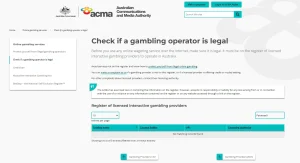
Paramax9 has evidence of real Australian player activity, but that is not the same thing as Australian regulatory authorisation. Paramax9 does not appear in the ACMA register of licensed interactive wagering providers. Casino Guru and Vegas Expert also raise concerns about offshore licence claims associated with the brand, while public complaint records show Australian users reporting account, deposit and withdrawal disputes. Those signals do not justify a simple label such as “safe”, “scam” or “fully legal”. The more useful conclusion is that Australians should separate observable service activity from regulator records, ownership transparency and complaint-handling evidence before sending money.
Table of Contents
- The strongest facts in the public record
- Trust matrix: documented facts, reviewer concerns and open questions
- Why the ACMA result carries more weight than a casino badge
- What current complaint evidence adds to the trust picture
- Licensing concerns raised by independent reviewers
- Five checks to make before depositing
- What the current enforcement environment means
- Operator identity and accountability are separate trust checks
- Where Paramax9 trust checks leave Australian players
The strongest facts in the public record
Paramax9 is not merely a name found in promotional material. Multiple public complaint records document Australian players describing deposits, play and attempted withdrawals with the casino. That establishes that the service has been used by Australians. It does not establish that the operator is licensed by an Australian authority or that Australian gambling protections apply to the relationship.
Casino Guru and Vegas Expert describe Paramax9 as having been established in 2024. Both directories report English-language customer support and a range of casino features. For a reader checking basic operational signals, this provides more substance than a brand with no traceable history at all. However, operational detail is only one part of a trust assessment. The questions that matter more for financial risk are who regulates the operator, whether the operator identity can be established, what independent complaints show, and whether important terms are clear before a deposit is made.
Trust matrix: documented facts, reviewer concerns and open questions
| Trust question | What the evidence shows | How to interpret it |
|---|---|---|
| Australian player activity | Documented in multiple public Australian complaint records involving deposits, play or withdrawal attempts. | The casino has been used by Australians, but this is not proof of local licensing. |
| Australian licence | The current ACMA register contains no Paramax9 entry. | Do not assume Australian regulatory protection or local dispute-resolution coverage. |
| Offshore licence claims | Independent reviewers have questioned displayed PAGCOR and Curaçao licence claims and report that they could not verify a valid licence number. | Treat the concern as an attributed reviewer finding unless a current regulator record independently confirms a licence. |
| Ownership and official identity | Public ownership and domain information remains incomplete. | Less corporate transparency makes it harder to identify the accountable legal operator. |
| Complaints | Australian complaints include disputes involving withdrawals, account closure and deposits, with mixed case outcomes. | Complaint existence matters, but the status and evidence of each case should be read individually. |
| Support | English-language support is reported by Casino Guru and Vegas Expert. | This is useful operationally, but support availability is not equivalent to independent dispute resolution. |
Why the ACMA result carries more weight than a casino badge
For Australians, a local licence claim should be checked against the regulator, not accepted from a footer badge or an affiliate review. ACMA maintains a register for licensed interactive gambling providers. The current ACMA register contains no Paramax9 match. The regulator also states that online casino services supplied to people in Australia are prohibited interactive gambling services under the Interactive Gambling Act framework.
This does not mean every question about Paramax9 can be collapsed into a one-word legal verdict. Australian regulation distinguishes types of gambling services and places obligations on providers. The practical point for a player is narrower: Paramax9 does not appear in the Australian licensed-provider register, so readers should not assume that it sits inside the same Australian licensing and consumer-protection structure as an operator listed by ACMA. See Australian online casino law for the broader framework.
What current complaint evidence adds to the trust picture
Complaint records are useful because they show concrete user experiences rather than marketing claims, but they also need careful handling. A complaint is an allegation, not a regulator finding. In 2026, Casino Guru published an Australian Paramax9 case involving an account closure and an attempted withdrawal. The case was closed after the player stopped responding, so it did not produce a substantive resolution. Another Australian complaint from June 2026 involved a deposit and was later marked resolved, but the published record did not explain the resolution details.
Older Australian cases include withdrawal disputes and allegations about confiscated winnings. Some were unresolved, while others closed because the player stopped responding. That mixed record is precisely why a simple count of complaints is not enough. The more useful questions are whether the operator engaged with the complaint, whether evidence was supplied, whether the disputed money was paid, and whether the case ended with a documented resolution or because communication stopped. Paramax9 complaints separates those outcomes instead of treating every complaint as equally proven.
Licensing concerns raised by independent reviewers
Casino Guru and Vegas Expert raise concerns about licence information displayed for Paramax9, specifically references to PAGCOR and Curaçao. These are third-party assessments, not direct determinations by those regulators, and neither source provides a regulator record that establishes a valid offshore licence number for Paramax9.
That distinction matters. A review site can identify a suspicious badge or a claim that does not match a public record, but only the relevant licensing authority can provide the strongest confirmation that a licence exists and belongs to the named operator. Australians should therefore avoid interpreting an offshore regulator logo as proof of local authorisation, established ownership or access to an Australian complaints mechanism unless the regulator record matches the operator.
Five checks to make before depositing
- Check the operator identity. Look for the legal entity responsible for the site, not only the casino brand name. If ownership details are missing or inconsistent, treat that as unresolved rather than filling the gap with assumptions.
- Check the regulator record. For an Australian licence claim, use ACMA’s register. For any offshore licence claim, verify the licence number and operator name with the named regulator rather than relying on a logo.
- Read withdrawal terms before paying. Focus on verification requirements, bonus restrictions and any stated limits. Paramax9 withdrawals covers payout conditions without treating unsupported limits or processing times as facts.
- Read complaint outcomes, not just headlines. A resolved complaint, an unresolved dispute and a case closed because a player stopped responding are materially different signals.
- Keep records. Save deposit confirmations, bonus terms, chat transcripts and withdrawal requests. If a dispute occurs, a dated evidence trail is more useful than relying on memory or a support summary.
What the current enforcement environment means
Australia actively enforces the Interactive Gambling Act. By July 2026, ACMA said 1,774 illegal gambling and affiliate websites had been blocked since website blocking began in November 2019. The regulator has also continued investigating prohibited and unlicensed services. That wider enforcement context is relevant because it shows why an Australian user should verify the exact regulatory status of a gambling service rather than infer legitimacy from accessibility, advertising, local payment branding or an Australian-dollar balance.
It is also possible for a site to be reachable before any blocking action occurs, or to change domains. Therefore, the fact that a website currently loads is weak evidence of trustworthiness. The stronger evidence is a combination of regulator records, identifiable operator information, transparent terms and a complaint history that can be independently reviewed.
Operator identity and accountability are separate trust checks
Customer support can answer account questions, but support access does not identify the legal entity that is accountable for the casino. Those are different layers of trust. A reader should be able to distinguish the brand name shown on the site from the company named in terms, the entity attached to any licence claim and the party receiving or processing payments. When those details do not line up clearly, the gap matters because it can affect where a complaint can be directed and which rules apply.
This is especially important when an account is restricted or a withdrawal is disputed. A support agent may explain what the casino says happened, but an enforceable complaint path depends on the operator and jurisdiction behind the account. The ACMA register result therefore carries more weight for Australian authorisation than a brand-facing support channel, while offshore licence claims need their own regulator match.
A practical trust assessment should also keep service quality separate from regulatory status. Fast replies, a broad game catalogue or familiar Australian payment methods can all improve usability without proving who supervises the operator. Conversely, a complaint does not automatically prove misconduct. The useful picture comes from putting the pieces together: identifiable operator details, regulator records, transparent terms, documented complaint outcomes and a consistent explanation of how deposits and withdrawals are handled.
Where Paramax9 trust checks leave Australian players
The available public information points to several separate risk factors rather than a simple binary label. Paramax9 has documented Australian player activity and reported English support, but Paramax9 does not appear in the current Australian licensed-provider register. Independent reviewers also question offshore licence claims, while public complaints show real Australian disputes with mixed outcomes. For an Australian reader, those are reasons to verify the legal operator, licence record, terms and withdrawal conditions before risking funds. Start with the Paramax9 Australia review, then use the regulator-focused and complaint pages for the points that need the closest scrutiny.